
How to Build a Stronger Bond With Your Cat: Science-Backed Insights
- Nicole Kohanski
- 2 days ago
- 3 min read

Updated: 24 minutes ago

The bond between humans and cats is special—and when nurtured, it can bring joy, comfort, and even health benefits to both parties. But what actually strengthens that bond? A recent study out of Spain offers fascinating insights into the factors that affect the quality of the human-cat relationship. Whether you're a seasoned c
at parent or a new adopter, these findings can help you build a more meaningful connection with your feline friend.
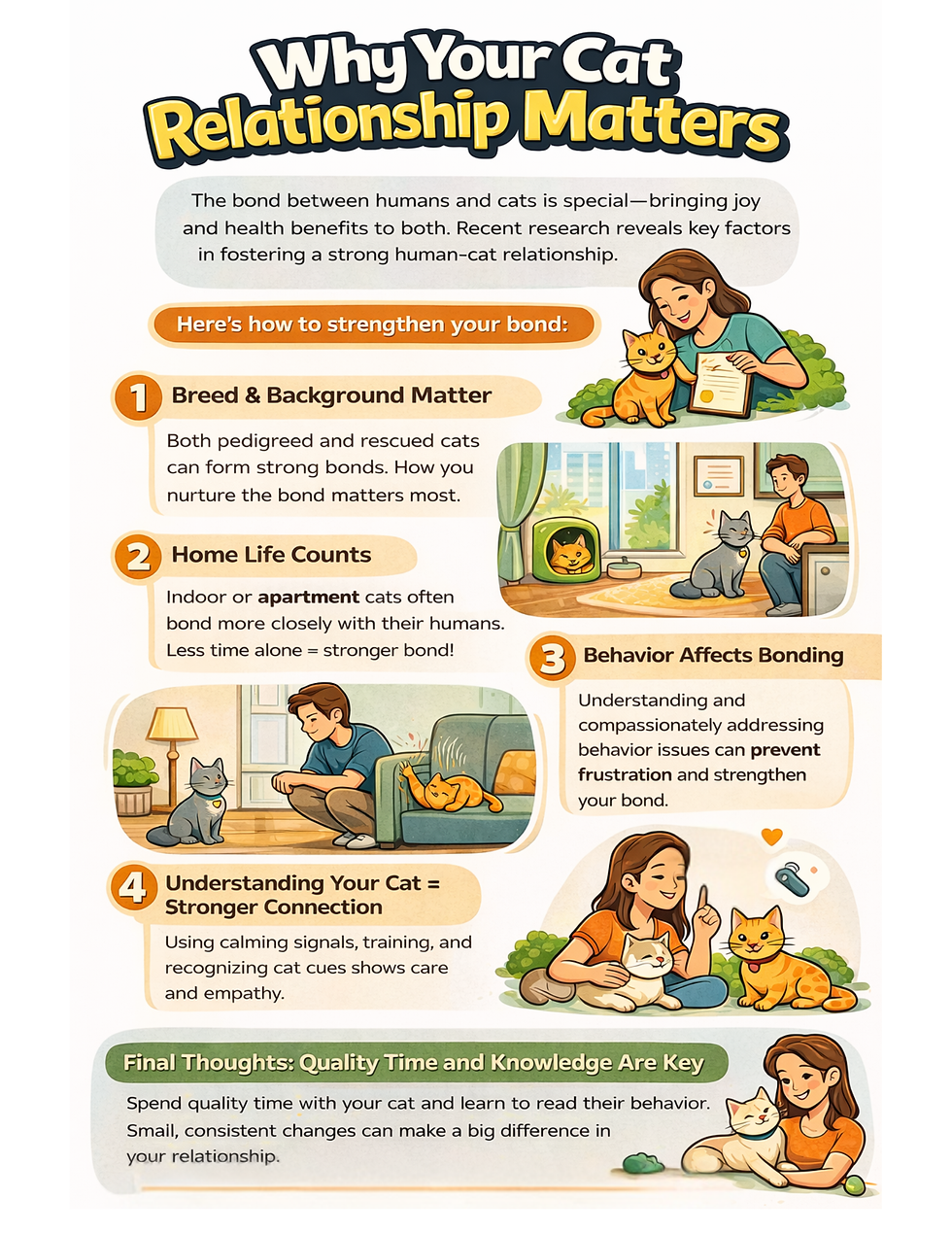
Why Your Cat Relationship Matters
It’s no secret that pets can improve our lives. Cats, in particular, have been associated with reduced stress, improved mental health, and enhanced emotional well-being. But not all human-cat relationships are created equal. A strong bond can lead to a happier home, better behavior, and even greater compliance with vet care. A weak bond, on the other hand, can lead to frustration, neglect—or sadly, abandonment.
The good news? Many factors that influence your relationship with your cat are within your control.

1. Breed & Background Matter
Surprisingly, cat breed and origin play a role in how bonded owners feel with their cats. Owners of purebred cats reported slightly stronger relationships. This may be due to the predictable traits and upbringing of pedigreed cats.
However, cats that were adopted or rescued from the street also scored very high on relationship quality. Adopters often form deep emotional bonds, possibly because of a sense of responsibility and compassion that comes with rescue.
Takeaway: Whether you adopt or shop, the bond you build depends more on what you do after bringing your cat home.

2. Home Life Counts
Where and how your cat lives impacts your bond:
Cats living in apartments had stronger relationships with their humans compared to those in rural or farm settings.
Indoor cats tended to be closer to their owners, although this particular study didn’t find a huge difference in bond strength compared to cats with outdoor access.
Cats that spent less time alone (under 4 hours a day) had better relationships with their humans. Those left alone 8+ hours a day had significantly lower relationship scores.
Takeaway: More time together in closer quarters leads to more bonding moments. If you're gone a lot, consider enriching your cat’s environment or adding a feline companion.

3. Behavior Affects Bonding
Not all kitty behavior is cute. Cats with moderate to severe behavioral problems—like aggression or inappropriate elimination—had weaker bonds with their owners.
But here’s the kicker: many so-called “problem behaviors” are completely normal feline behaviors misunderstood by humans (like scratching or being aloof).
Takeaway: Educating yourself on normal cat behavior and responding compassionately to problems can preserve your bond and avoid unnecessary frustration.

4. Understanding Your Cat = Stronger Connection
Owners who scored higher on the relationship scale were more likely to:
Use calming communication, like slow blinking
Train their cats (yes, cats can be trained!)
Understand feline vocalizations
Recognize signs of pain or discomfort
These behaviors show emotional investment, attentiveness, and empathy—all key ingredients for a strong relationship.
Takeaway: Learn your cat’s language! Simple actions like blinking slowly or recognizing when your cat is stressed can go a long way.
5. More Cats, More Connection?

Interestingly, people with multiple cats tended to report better relationships than those with just one. This could reflect a deeper interest in cats overall, or a desire to provide companionship for their pets.
However, the study also cautions that multi-cat households can be stressful for some cats. Compatibility between cats is key, and owners should monitor for signs of tension or stress.
Takeaway: If adding another cat, do slow introductions and monitor dynamics. Your goal is more harmony, not just more paws.
Final Thoughts: Quality Time and Knowledge Are Key

The researchers concluded that while some factors (like your cat’s breed or where you live) aren’t easily changed, many are within your control. Understanding your cat’s needs, spending quality time together, and learning to read their behavior can dramatically improve your relationship.
If you're struggling with behavioral issues or want to learn more about feline communication, don’t hesitate to reach out to a qualified cat behavior consultant. Small changes in how you interact with your cat can make a big difference.
Source:
Title: You and your cat: Factors affecting quality of human-cat relationship
Authors: David J. Menor-Campos, Inmaculada Peña-Vela, Tiffani Howell
Published in: Journal of Veterinary Behavior, Volume 81 (2025), Pages 26–33

Comments