
Helping Your Anxious Cat

One of the most stereotypical images of a cat is the "fraidy" cat. She has a fluffed-up tail and arches her back to look big and mighty. She's a popular Halloween decoration. This is not, however, the basic nature of cats. When the cat you have at home is frequently hiding, running, avoiding, or even freezing, it is important to know that it does not have to be that way.
There are several things that may be contributing to your cat's fear, and every one of them has strategies for improving your cat's quality of life. In this article, we cover the possible reasons your cat may be anxious, how to help them feel better, and when it might be time to seek professional help for your cat.
Reasons Cats Feel Anxiety
Just like in humans, most anxiety serves a basic function of keeping the individual safe. Simply discounting your pet's nervous behavior as part of the personality or even something they are doing for attention is misguided and avoids the reality that we can do things to help our cats feel better.
Reason No. 1: You recently adopted your cat
A perfectly normal reason to see anxiety and stress in cats is because they are still adjusting to their new home and roommates. A very general rule of thumb given to most pet adopters is the 3-3-3 rule. This "rule" says that you will often see your pet relax more and more after 3 days, then 3 weeks, and after 3 months you will begin seeing more of their true personality. This timeline can vary for many cats based on their history. Take it slow, build trust, and set your cat up for success by reading more about how to welcome home your new cat in our previous blog post.
Reason No. 2: Your cat was not adequately socialized as a kitten
When kittens are between two and eight weeks old, they experience what we call a "critical period" during which they are most susceptible to developing positive associations with non-cat beings. If your cat was not exposed to humans before the 8 week mark, it becomes harder for them to develop positive feelings about humans. This does not mean it is impossible, but we do have to be more careful in how we interact with them and do some extra work to help them feel safe around us.
Reason No. 3: Your cat has experienced chronic stress
If a cat experiences physical or emotional stress for an extended period of time, there are likely to be effects on their nervous system. Like in humans, when the cat's nervous system is very frequently in a hypervigilant state, it can get "stuck" and make it difficult for your cat to relax. Examples of chronic emotional stress include the use of punishment, ignoring the boundaries they set for physical contact, failing to meet their physical/social/mental needs, or even living in a very loud and busy household. Chronic physical stress such as certain medical conditions can also impact your cat's mental state.
Reason No. 4: (Less common) Your cat is genetically predisposed to anxiety
While less common than the previously stated reasons, some cats do come out of the womb with a predisposition to being anxious. Most commonly, this is related to the experiences the mother had throughout her life and also while the kittens were in the womb. This is usually not determined to be a cause of anxiety until all other possible reasons and interventions are explored or we have extensive details on the mother and her pregnancy experience.
How to Help
For any of the four reasons we discussed, the interventions we start with are all the same. Let's break down the basic methods to help an anxious cat feel safer and more confident.
Meeting Needs & Reducing Stress
Our pets have physical, mental, and social needs just like humans do. The first step in any behavior modification plan is always making sure the animal's needs are met. A great set of guidelines developed by cat experts at the ISFM and AAFP include the Five Pillars of cat needs. The Five Pillars are:
Provide a safe place
Provide multiple and separated key environmental resources
Provide opportunity for play and predatory behavior
Provide positive, consistent and predictable human–cat social interaction
Provide an environment that respects the importance of the cat’s sense of smell
We go more in depth into these five pillars in our blog post here. We highly recommend reading more to understand what each of these means.
Another of the most basic interventions is removing sources of stress for your cat. This means first identifying what it is, and then either changing how they feel about that trigger or removing it from their life. Common sources of stress for cats include household pets they don't get along with (this can be subtle sometimes), outdoor cats hanging out around the house, children who are too young to understand or haven't been taught how to interact with cats, and the use of punishment (spray bottles, yelling, making loud noises, scat mats/electronic mats, and scent deterrents).
Body Language & Consent Tests
Educating yourself on body language that is normal and abnormal is one of the kindest things you can do for your pet. They can't tell you how they're feeling with words, after all. Below is a graphic by Lili Chin that can get you started with understanding the language your cat is speaking to you all day long.

If you are ever unsure whether your cat feels comfortable interacting with you, a wonderful tool is the consent test. Here's how it goes: Reach out a clean hand or finger to your cat near their face. If they turn their head away or just stare, your cat has said "no thanks." Take the answer! If they lean their face into your hand, you have a yes.
Now you are at stage 2. As you begin gently petting them on the cheek, count to 3 and then move your finger away just a bit. If your cat pushes their face back into your hand, you have received a "more please!." Continue with this "Pet, Pet, Pause" method until you get really comfortable your cat's signals, or continue it forever! When your cat sees that you are leaving them in charge of when they are touched, they are more likely to solicit pets.
If you have a newly adopted cat who won't come out from their hiding spots, refrain from trying too hard to "win them over" by putting treats in their face. This can make them suspicious of the treats altogether. Instead, follow the advice in our new cat post and if they are still struggling, you can play the "treat-retreat" game. Instead of using food to lure your cat toward you, you're going to toss treats near them so that they don't have to get closer to you. After many repetitions, your cat should start inching closer to you on their own. This may take sessions over many days, so be patient. If your cat flat out refuses to eat the food in front of you, toss the treats and then leave the room. They may not feel comfortable eating in front of you yet.
When to Seek Professional Help
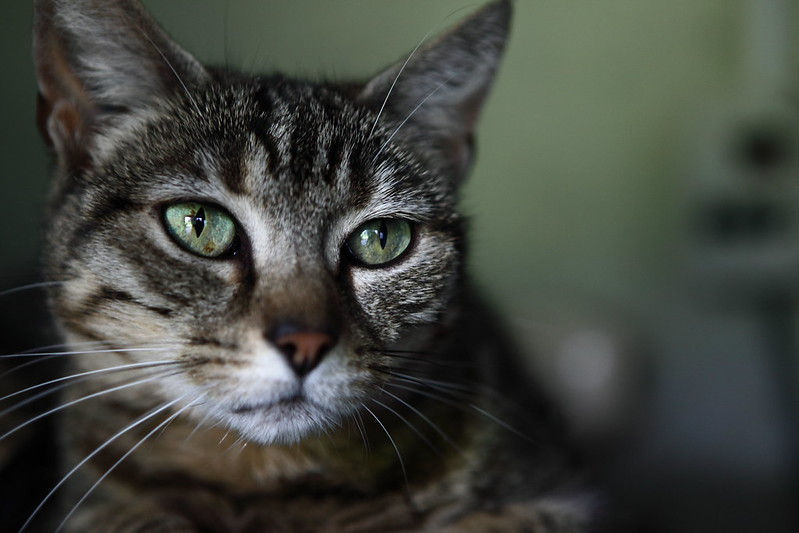
You can get help from a qualified behavior consultant for fear at any point, but here are some signs that it's definitely time:
Your cat hides most of the day (and you have had them in the home for more than a few weeks)
Your cat has started harming others in the home
It's impossible to get vet care for your cat due to their fear
Your cat is not eating enough food and vets have ruled out medical causes
Your cat has started house soiling
Some of the things we can do for your anxious cat beyond what's discussed in this article:
Help find the triggers
Resolve conflict with other pets
Change the underlying emotions felt about humans
Teach confidence-building exercises
Work with your veterinary team to determine whether medication is indicated in your cat's case
We at Purrfect Paws University thank you for choosing to learn more about how to help your cat feel better. And your cat thanks you too!
Christian Flournoy, CPDT-KA
Christian is a professional trainer and behavior consultant for Purrfect Paws University and Wiggle Butt Academy. She is a Fear Free Certified Professional who offers training and behavior consulting for dogs and cats of all ages. Christian enjoys working with pets experiencing fear and clients with disability and illness that make living with pets more complicated. She is passionate about making low-stress pet ownership accessible to more people.


Comments