
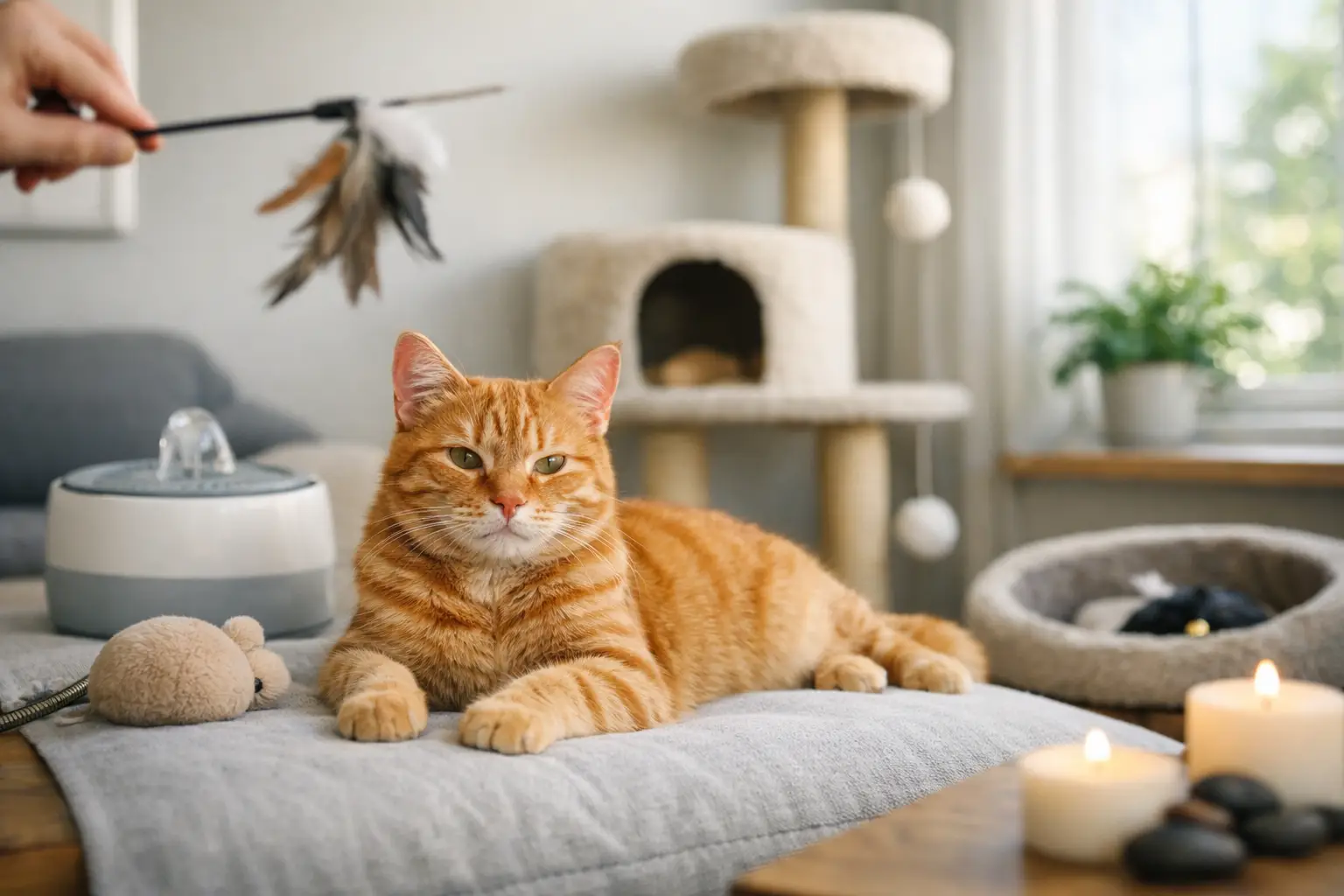
8 Ways to Reduce Stress in Indoor Cats at Home

A cat who hides under the bed when friends visit, swats after being petted, scratches the couch, or stops using the litter box is not giving you a hard time. They may be having a hard time. Behavior is information, and indoor cats can feel stressed even in homes where they are deeply loved, well fed, and never left outside.
To reduce stress in indoor cats, start by looking beyond the behavior itself. Your cat’s environment, health, routines, social relationships, and sense of choice all shape how safe they feel. You are not failing if your cat seems worried or difficult. There is a kind, practical path forward that does not rely on scolding, spraying, or forcing them through frightening situations.
Why indoor cats get stressed
Indoor life protects cats from traffic, predators, and many infectious diseases. But safety is not the same as meeting every behavioral need. Cats are hunters, climbers, observers, explorers, and creatures of routine. A home can become stressful when it offers too little control, too few appropriate outlets, or too much unavoidable change.
Stress is not always dramatic. Some cats become quieter, sleep more, overgroom, or avoid certain rooms. Others become more vocal, restless, reactive with other pets, or suddenly particular about the litter box. A cat may also scratch furniture more intensely because scratching is both a normal physical behavior and a way to leave familiar scent and visual signals in their space.
A change that seems small to us can be huge to a cat: a new baby, construction noise, guests, a different work schedule, a moved sofa, a visiting dog, or tension between cats sharing a hallway. In multi-cat homes, stress often comes from subtle resource blocking. One cat may not fight, but may quietly prevent another from reaching food, a favorite perch, or the litter box.
1. Start with a veterinary checkup
New or worsening behavior deserves medical attention first. Pain, dental disease, arthritis, urinary discomfort, skin conditions, gastrointestinal illness, thyroid changes, and age-related cognitive changes can all look like stress or cause it.
This is especially urgent if your cat is straining to urinate, making frequent trips to the litter box, producing little or no urine, crying in the box, or has blood in the urine. Urinary obstruction, particularly in male cats, is an emergency. Call a veterinarian right away.
Once medical causes are addressed or ruled out, you and your veterinary team can better understand the emotional and environmental pieces of the puzzle. Sometimes medication is also part of humane behavior care. It is not a failure or a last resort. For some cats, it creates enough relief for learning and environmental changes to work.
2. Create a home with choices
Cats cope better when they can choose where to rest, watch, hide, climb, and move away. A single cat bed in a busy living room may be cozy, but it is not enough if the cat cannot escape a vacuum, a toddler, or an enthusiastic dog.
Offer resting places at different heights and in different parts of the home. A sturdy cat tree, wall shelves designed for cats, a window perch, and a covered bed can each serve a different purpose. Height is particularly helpful in multi-pet homes because it lets a cat observe activity without being in the middle of it.
Hiding is not bad behavior. A safe hiding spot helps many worried cats recover. Rather than pulling a cat from under the bed, make that area safer and add additional retreats nearby, such as an open carrier with soft bedding or a box placed in a quiet corner. The goal is not to make your cat be social. It is to help them feel safe enough to choose connection when they are ready.
3. Make litter boxes easy to reach and easy to use
Litter box trouble is one of the clearest ways stress shows up at home, and it can strain even the most patient relationship. Cats do not urinate outside the box out of spite. They may be uncomfortable, scared, unable to access the box, unhappy with the setup, or trying to communicate that something is wrong.
A useful starting point is one box per cat, plus one extra, placed in separate locations. Separation matters. Three boxes lined up in one laundry room can feel like one guarded resource to a cat who is being watched or ambushed by a housemate.
Most cats prefer a large, uncovered box with unscented clumping litter and regular scooping. However, preferences vary. An older cat with arthritis may need a low entry. A shy cat may need a box away from foot traffic. Avoid placing boxes beside loud appliances or in places where a cat can be trapped with only one way out.
4. Use play that lets your cat finish the hunt
A laser pointer can get a cat moving, but it should not be the only play option because there is nothing to catch. Many cats benefit most from interactive play with a wand toy that moves like small prey: creeping behind furniture, pausing, darting away, then becoming still.
Short sessions are often more successful than one long workout. Try two or three five-to-ten-minute play periods at times your cat is naturally alert, such as before breakfast or dinner. Let them catch the toy regularly. Follow play with a small portion of food or a treat when appropriate, which can complete the hunt-catch-eat sequence.
Rotate toys rather than leaving every toy out all the time. Cardboard boxes, crumpled paper, treat balls, and food puzzles can add novelty without making your home feel chaotic. If a cat becomes frustrated with a puzzle, make it easier. Enrichment should build confidence, not create another hard problem.
5. Keep daily life predictable, with room for consent
Cats notice patterns. Consistent meal times, quiet rest periods, and a familiar greeting after work can lower uncertainty. That does not mean life must run on a rigid schedule. It means your cat benefits from knowing that important things like food, play, and access to safe spaces are dependable.
Consent matters, too. Let your cat initiate or opt out of touch whenever possible. Watch for small signs that petting has become too much: a twitching tail, ears turning sideways, skin rippling, a sudden freeze, or looking back toward your hand. Pause before the swat. Respecting those early signals teaches your cat that communication works.
Never punish fear, hissing, growling, or a defensive swat. Those behaviors are warnings, not disrespect. Punishment can suppress the warning while making the underlying fear worse, which increases the risk of a bite later.
6. Help cats share space without competition
Living peacefully with another cat is not the same as being best friends. Some cats enjoy close companionship; others simply need a polite arrangement with enough space and resources. It depends on each cat’s history, temperament, and the layout of the home.
Give each cat access to multiple food and water stations, litter boxes, scratching areas, beds, and high perches. Place resources so one cat cannot easily guard all of them. Notice who waits at doorways, who changes direction when another cat enters, and who stops using favorite areas. Quiet avoidance can be just as meaningful as a fight.
If there has been chasing, fighting, stalking, or tension after a move or veterinary visit, do not force the cats to "work it out." A thoughtful separation and gradual reintroduction plan may be needed. Moving too fast can deepen fear and damage trust.
7. Give scratching a better place to happen
Scratching is normal and necessary. Cats scratch to stretch, maintain their claws, and communicate through scent and visible marks. The question is not how to stop scratching, but where and how to direct it.
Put sturdy scratchers where your cat already scratches, rests, or enters a room. Offer both vertical and horizontal options, since preferences differ. A vertical post should be tall enough for a full stretch and stable enough that it does not wobble. If the couch is the favorite target, place an appealing scratching surface directly beside it while protecting the furniture temporarily with a suitable cover or barrier.
Reward your cat for using the scratcher with a treat, praise, or a brief play session. Declawing is not a behavior solution. It removes part of the toe and can contribute to pain and new behavior challenges.
8. Reduce stress in indoor cats during unavoidable changes
Some stressors cannot be avoided. Guests will visit, repairs will happen, and carriers will eventually be needed. Preparation can make these events less overwhelming.
For visitors or loud activity, set up a quiet room in advance with water, a litter box, bedding, hiding places, and familiar scents. Let your cat choose whether to stay there. Ask guests not to reach for or corner the cat. With carrier training, leave the carrier out as a normal resting place, occasionally toss treats inside, and practice brief, calm steps long before a veterinary appointment.
Progress should be gradual. If your cat freezes, flees, refuses food they normally love, or becomes more reactive, the step was probably too difficult. Back up and make it easier. Cats learn best when they feel safe enough to learn.
A calmer cat is not created by demanding more tolerance from them. It grows from repeated experiences of safety, choice, and being understood. If stress is affecting your cat’s daily life, litter box habits, relationships, or health, Purrfect Paws University can help you sort through what your cat may be communicating without fear, force, or judgment. Schedule a free phone consultation to talk about a compassionate plan for your household.


Comments